

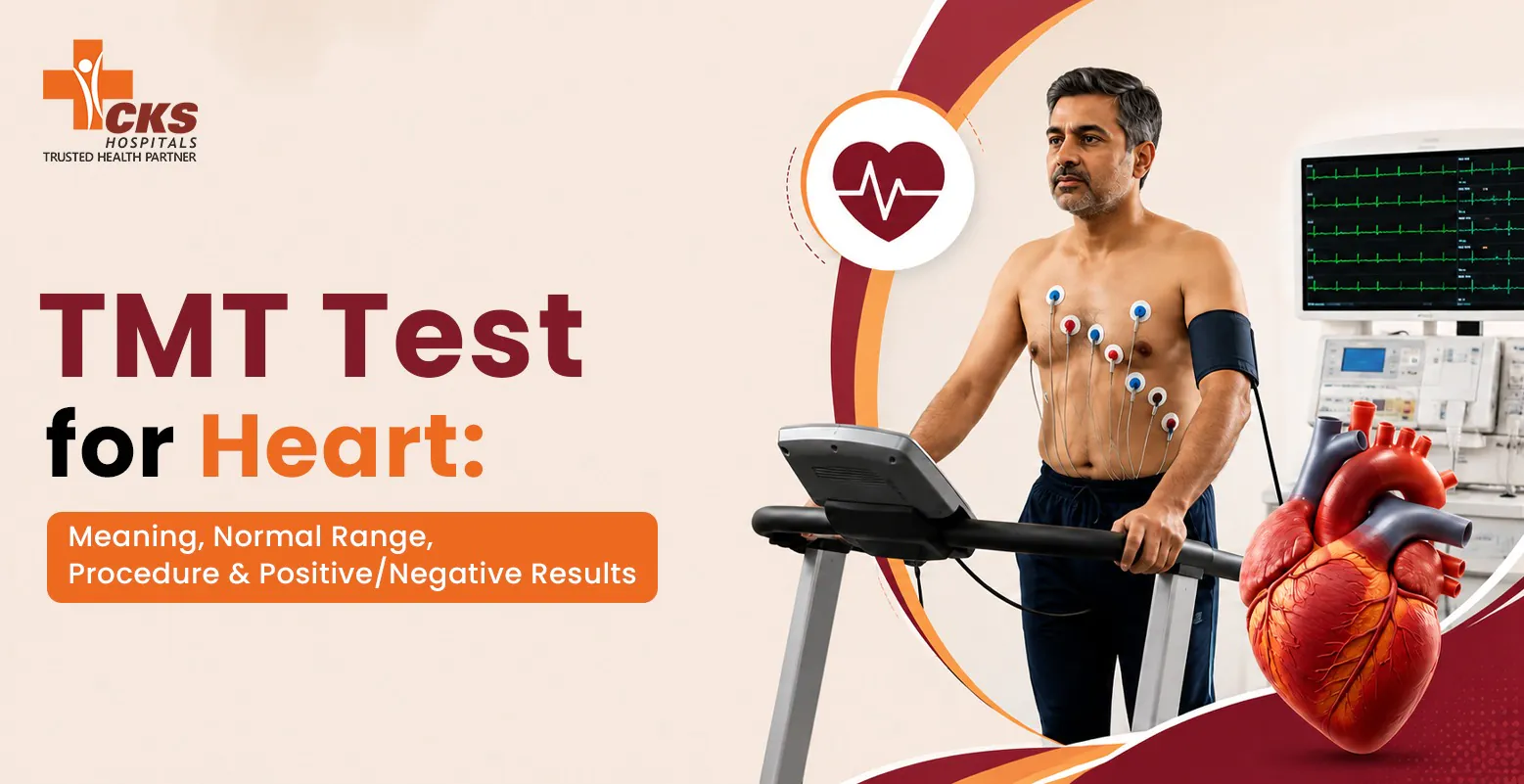
TMT Test for Heart: Meaning, Normal Range, Procedure & Positive/Negative Results
What Does a TMT Test Tell About Your Heart Health? TMT helps assess how the heart works when you exercise, as well as whether the heart gets enough blood during exercise. Cardiovascular diseases affect more than half a billion people around the world, which is why it’s essential to conduct an evaluation of the symptoms at an early stage. Patients experiencing exertional symptoms are often referred by a cardiologist in Jaipur for a TMT test when exercise-related heart disease needs to be assessed.
To help you better understand your report, this guide covers the TMT procedure, normal findings and what positive, negative, borderline, and inconclusive results may mean.
What Is a TMT Test for Heart?
A TMT test, short for treadmill test, is a type of cardiac stress test carried out while walking on a treadmill. It is also known as an exercise stress test or a treadmill stress test. Doctors use it to see how the heart performs under physical exertion.
What Does a TMT Test Check?
The TMT test demonstrates the response of the heart under increasing physical load. The doctor will be able to observe:
- ECG changes
- Heart rate reaction
- Blood pressure reaction
- Pain in chest or shortness of breath
- Exercise tolerance
- Exercise recovery
Why Is a TMT Test Done?
TMT test is carried out to measure the amount of blood reaching the heart during exercise. Since exercise increases the amount of oxygen needed by the heart, this test identifies issues with heart blood supply or abnormal response of the heart.
Common Reasons for TMT Test
Cardiologists recommend this test for several clinical reasons, which include:
- Chest pain on exertion
- Breathing difficulty on exertion
- Palpitation
- Coronary artery disease suspected
- ECG abnormalities at rest
- Diabetes, high blood pressure, smoking, obesity or a family history of heart disease
- Follow-up for heart-related issues, if recommended by cardiologist
When Chest Pain Should Not Be Ignored?
Chest pain during physical activity should not be ignored, especially if it comes with breathlessness, sweating, dizziness or unusual fatigue. Anyone with chest pain during exertion should consult a chest pain specialist in Jaipur, who can determine whether a TMT test or another cardiac investigation is needed to find the cause.
How Is the TMT Test Procedure Done?
In the TMT test, the patient walks on a treadmill with the ECG, heart rate, blood pressure, and symptoms being recorded. The test helps determine the reaction of the heart during increased exercise.
Step-by-Step TMT Test Procedure
- The doctor analyses your symptoms, medical history, and earlier results.
- ECG sensors are attached to your chest area.
- Your resting ECG, heart rate, and blood pressure are measured.
- You start exercising on the treadmill.
- The treadmill’s speed and gradient are slowly increased.
- Your ECG, blood pressure, heart rate, and symptoms are constantly monitored.
- The test will be stopped when the heart rate reaches the desired level or you develop any symptoms.
- Recovery ECG and blood pressure results are taken.
- Results are analysed by a cardiologist and a report is made.
How Long Does a TMT Test Take?
The testing period normally takes 10 to 15 minutes. When preparation and recovery are included, the whole test normally takes 30 to 45 minutes. The exact time can still vary from one patient to another, depending on the patient’s fitness level, age, symptoms, exercise capacity and clinical need.
What Is the Normal Range of the TMT Test?
There is no normal range of the TMT test like a blood test. Instead, cardiologists assess several exercise-related parameters to determine whether the heart responds appropriately to the physical stress.
Normal TMT Test Parameters
A normal TMT test result indicates the heart meets the body’s increased oxygen demands during the exercise without concerning symptoms. Some of the key findings evaluated during the normal TMT test are:
| Parameter | Expected During the Test | Clinical Interpretation |
| ECG | No significant ST changes | No clear ischemia |
| Heart Rate | Rises with exercise | Normal cardiac response |
| Blood Pressure | Systolic BP rises | Supports a normal hemodynamic response |
| Symptoms | Exercise is completed without chest pain, severe breathlessness, dizziness, or fainting | Good exercise tolerance |
| Recovery | Heart rate and blood pressure begin normalising after exercise stops | Normal recovery |
| Exercise Capacity | Expected workload achieved | Good functional capacity |
Important Note on ST-Segment Changes
The ST-segment is another important ECG feature that is observed in a TMT test. The depression of the ST-segment horizontally or downwards could indicate ischemia of the myocardium, which is decreased blood flow in the heart muscle. If there is a 1 mm or more depression of the ST-segment after the J point, then it may be regarded as an abnormal result.
What Does a Positive TMT Test Mean?
A positive test for the treadmill stress test indicates that there might be insufficient blood flow to the heart muscles during exercise. This happens because the demand for oxygen increases due to exercise, while the supply of blood fails to match the increased demand.
Does Positive TMT Always Mean Heart Blockage?
No. It does not necessarily indicate that there is an obstruction in the coronary artery when the TMT test gives positive results. There are some individuals who could have false-positive results, while there are those who need further tests for the specific cause of the problem.
What Happens After a Positive TMT?
The next step will be determined by the intensity of the symptoms and risk factors and the results of the TMT. The cardiologist can advise you to take other tests, including the 2D echo, stress echo, coronary CT angiography and coronary angiography.
What Does a Negative TMT Test Mean?
A negative TMT indicates the absence of any significant ECG abnormality or symptoms related to physical exertion.
Can You Still Have Heart Disease After a Negative TMT?
Yes, in case of a negative TMT, the chances of developing exercise-induced ischemia are less, but it is not a conclusive indication that there is no heart disease.
When Does a Negative TMT Still Need a Doctor’s Review?
Medical evaluation still becomes crucial if there is chest pain and breathlessness despite the negative result. In addition to this, further medical evaluation would be necessary in the case of people who have diabetes, hypertension, high cholesterol or a significant family history of heart disease.
Difference Between Positive, Negative and Borderline TMT Results
Interpretation of TMT results is based on changes seen in the ECG, the presence of symptoms during exercise, exercise tolerance, and overall clinical scenario. The following table brings a side-by-side comparison of how positive, negative and borderline TMT results indicate your health:
| Result | Simple Meaning | Should You Worry? | Next Step |
| Negative TMT | No major abnormality detected during exercise | Usually reassuring | Follow your doctor’s advice |
| Positive TMT | Possible reduced blood flow to the heart | Needs further evaluation | Consult a cardiologist |
| Borderline TMT | Mild or uncertain findings | Not necessarily, but requires review | Additional testing may be advised |
| Inconclusive TMT | Insufficient information for a clear interpretation | The result may not be reliable | Repeat or alternate testing may be required |
Who Should Consider a TMT Test?
The TMT test may be suggested to those patients who have symptoms that appear with exercise and also to those who are at risk of developing coronary artery disease.
A doctor may advise a TMT test if you experience:
- Chest pain during activity
- Breathlessness on exertion
- Palpitations
- Unexplained fatigue
- Diabetes
- High blood pressure
- High cholesterol
- Smoking history
- Obesity
- A family history of heart disease
TMT Should Be Done Only After Medical Advice
The TMT test must not be carried out merely as a screening process in the absence of any specific clinical indications. Amongst patients having few or minimal risk factors for heart disease, there is always a chance that the test will give false positive results at times.
Who Should Avoid a TMT Test?
Though the TMT test is one of the common tests to detect heart problems, it may not always be suitable for everyone.
TMT test is not advisable for the following patients:
- Those with unstable chest pain
- Recent history of heart attack
- High levels of uncontrolled blood pressure
- Heart rhythm disorder
- End-stage heart failure
- Heart valve disease
- Illness or breathlessness
- Those who find it difficult to walk on a treadmill
How to Prepare for a TMT Test?
To prepare for a TMT test, wear comfortable walking shoes. Along with that, there are some more dos and don’ts that need to be followed.
Prior to the TMT test:
- Wear comfortable walking shoes and comfortable clothing.
- Do not consume heavy meals prior to the test.
- Carry your old ECGs, Echo test results, prescriptions, etc.
- Let your healthcare provider know what medicines you are taking.
- Avoid smoking and caffeine intake as advised by your doctor.
What to Tell Your Doctor Before TMT
Prior to the examination, notify your physician of:
- Existing symptoms like chest pain, breathlessness or palpitations
- History of heart ailments or cardiac tests taken before
- Medications, vitamins or herbal preparations
- Other diseases like diabetes, hypertension, asthma, etc.
- Heart operations such as angioplasty or coronary artery bypass surgery
- Episodes of dizziness, fainting or loss of consciousness
When Is a TMT Test Stopped Early?
If the patient experiences any symptom or abnormality in the ECG results or blood pressure, the TMT test can be stopped before completion. Here are a few more reasons to stop the test before completion:
- Chest pain
- Breathlessness
- Feeling faint
- Abnormal changes in the ECG results
- High or low blood pressure during exercise
- Abnormal heart rhythms
- Fatigue
- Patient’s consent
TMT Test vs ECG vs Echo vs Angiography
TMT, ECG, Echo and Angiography evaluate different aspects of heart health. The most appropriate test depends on the patient’s symptoms, risk factors, and the specific clinical question being investigated.
| Test | What It Assesses | Common Use |
| ECG | Heart rhythm and electrical activity at rest | Initial evaluation of chest pain or palpitations |
| 2D Echo | Heart structure, valves, and pumping function | Assessment of cardiac anatomy and function |
| TMT Test | Heart response to exercise | Suspected exercise-induced ischemia |
| CT Coronary Angiography | Coronary artery narrowing | Non-invasive evaluation of coronary arteries |
| Coronary Angiography | Coronary artery blockages | Definitive assessment of significant coronary disease |
Each test offers different information and may be done in combination while testing the heart. For instance, patients who have chest pain upon exertion might require TMT, together with other cardiac tests as per their symptoms and risk factors. If they have severe coronary artery disease, they can be treated using angioplasty.
When Should You Consult a Cardiologist After TMT?
Consult a Cardiologist If:
- Your TMT results are positive, inconclusive, or borderline
- The test is negative, but you still have symptoms
- You experience chest pain even when your TMT results are negative
- You experience breathlessness while doing physical activities
- You have diabetes and are experiencing chest pains
- Your TMT was terminated before completion
- You have high blood pressure or high cholesterol levels
For a positive, borderline, or confusing TMT report, consult a heart specialist in Jaipur like Dr Prakash Chandwani for proper report interpretation and next-step guidance.
TMT Test Cost in Jaipur
The TMT test cost in Jaipur will differ based on the hospitals, diagnostic centres, the reporting procedures, and involvement of cardiologists. Due to the variation in the fees charged by healthcare facilities, it will be better to ask for the fee from the facility.
Factors That Affect TMT Test Cost
The overall cost may depend on:
- Hospital/ diagnostics center
- Cardiologist’s involvement in the test
- ECG reporting
- Emergency medical assistance
- Consultation fees
- Further investigation required after the test
Should Cost Be the Only Factor?
No. Sometimes, accuracy, safety, skilled staff, and proper interpretation of the reports might matter more than the fee in selecting facilities for conducting TMT tests. If you have questions about TMT testing or your results, consult a cardiologist for personalised guidance.
Final Takeaway
The TMT test gives a clear idea about the heart’s performance during physical exertion and also gives vital information regarding heart disorders caused by exercise. A positive result of TMT may indicate decreased blood supply to the heart, whereas a negative result is considered to be reassuring, but always has to be understood in conjunction with your symptoms. In case of chest pain, breathlessness or positive TMT results, visit a cardiologist in Jaipur today.
FAQs
1. What is a TMT test for the heart?
A TMT test measures the performance of your heart in response to physical exercise.
2. What is the full form of the TMT test?
The full form of the TMT test is Treadmill Test.
3. What is the normal range of a TMT test?
There is no specific range that can be expected from a TMT test.
4. What does positive TMT mean?
If your TMT result is positive, it means there may be a reduction in blood flow due to exercise.
5. Does positive TMT mean heart blockage?
No, it only indicates ischemia, which needs further examination.
6. What does negative TMT mean?
It means there are no ECG abnormalities due to exercise in the test.
7. Can TMT detect heart blockage?
It cannot diagnose heart blockage, but it detects changes in response to ischemic heart disease.
8. Is the TMT test painful?
No, but you may feel tiredness and breathlessness due to exercise.
9. Is the TMT test safe?
Yes, it is quite a safe test.
10. Who should not do the TMT test?
Patients who are suffering from unstable chest pain, recent heart attack, uncontrollable blood pressure levels, serious arrhythmia, and other specific conditions may not be eligible for the TMT test.
11. How long does a TMT test take?
Most TMT tests take approximately 30-45 minutes.
12. When should I consult a cardiologist after TMT?
You should consult a cardiologist if your TMT result is positive, borderline, inconclusive, stopped early or if symptoms persist despite a negative result.