

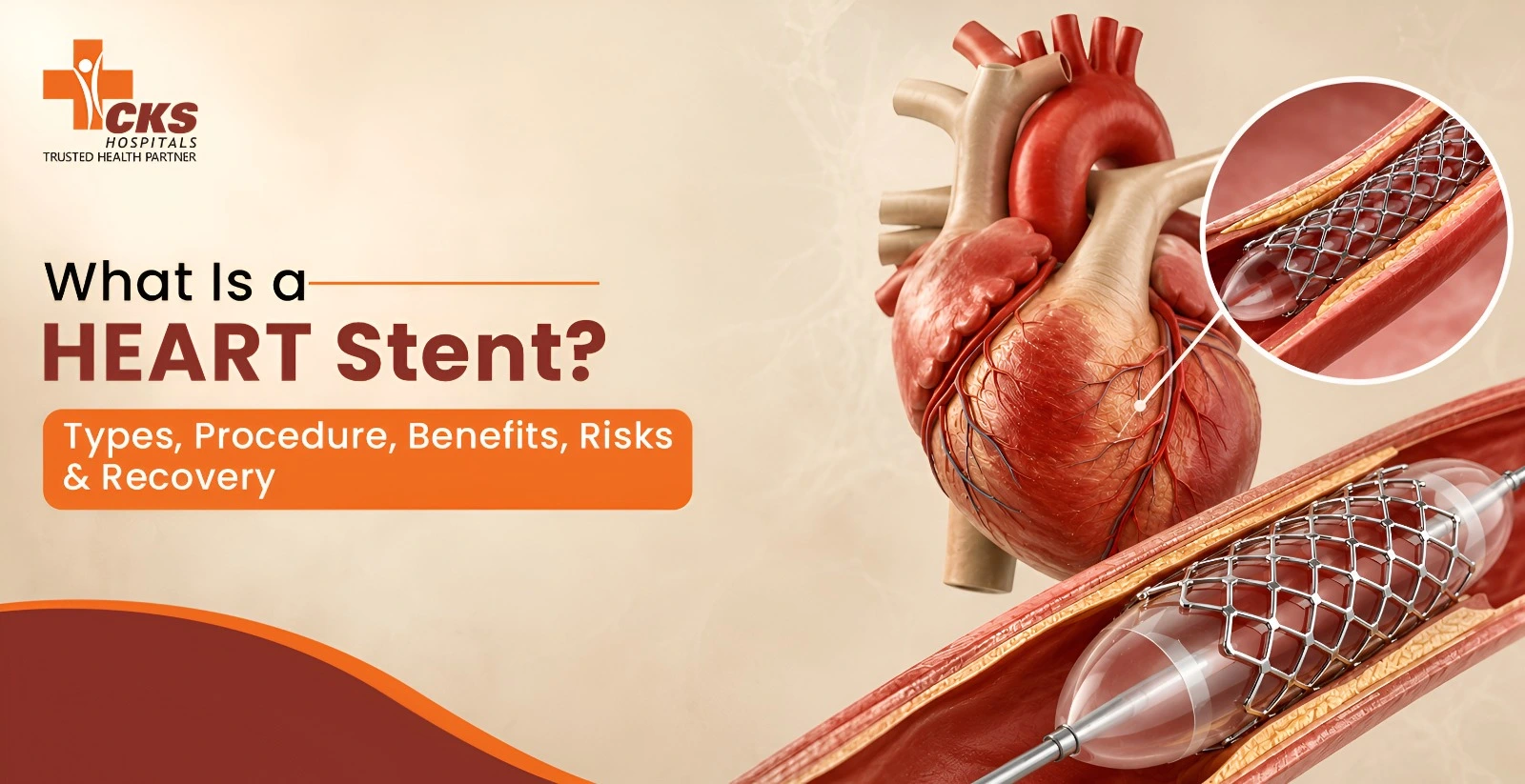
What Is a Heart Stent? Types, Procedure, Benefits, Risks & Recovery
Has your doctor mentioned a heart stent, and you’re still not entirely sure what that means? A heart stent is a small mesh tube that doctors place inside a narrowed or blocked heart artery. It holds the artery open so blood can move through it again. This usually happens during angioplasty, a minimally invasive procedure used for blocked coronary arteries.
Heart disease is still the leading cause of death in the India, according to the CDC. That’s part of why timely artery treatment matters. Done right, a stent can ease chest pain and boost blood flow. Medicines, diet changes, and regular checkups still matter after the procedure. If you’re dealing with chest pain or an angioplasty recommendation, talk to an experienced interventional cardiologist in Jaipur.
Table of Contents
- A Heart Stent Is a Small Mesh Tube That Helps Keep a Blocked Artery Open
- A Heart Stent Is Usually Placed During Angioplasty
- Angiography, Angioplasty, and Heart Stent Placement Are Different
- Doctors Recommend a Heart Stent When Blood Flow to the Heart Is Reduced
- Drug-Eluting Stents Are the Most Common Type of Heart Stent
- The Heart Stent Procedure Is Usually Done Through the Wrist, Arm, or Groin
- Before the Procedure
- During the Procedure
- After the Procedure
- The Main Benefits of a Heart Stent Are Better Blood Flow and Symptom Relief
- Heart Stent Risks Are Uncommon but Should Be Clearly Understood
- Common or Minor Risks
- Serious but Less Common Risks
- Recovery After Heart Stent Placement Usually Takes a Few Days to a Few Weeks
- A Heart Stent Does Not Permanently Cure Heart Disease
- You Should Consult a Doctor If You Have Chest Pain, Breathlessness, or Abnormal Angiography
- Get Expert Heart Stent, Angioplasty, and Cardiac Care in Jaipur
- FAQs
- 1. What is a heart stent?
- 2. Is heart stent placement open-heart surgery?
- 3. Why is a heart stent needed?
- 4. Which heart stent is commonly used?
- 5. Is angiography the same as angioplasty?
- 6. How long does recovery take after heart stent placement?
- 7. Can a heart stent get blocked again?
- 8. What precautions are needed after a heart stent?
- 9. When should I call a doctor after stent placement?
- 10. When should I consult an interventional cardiologist in Jaipur?
A Heart Stent Is a Small Mesh Tube That Helps Keep a Blocked Artery Open
Think of it as a tiny scaffold made of wire mesh. A doctor slides it into a narrowed coronary artery, expands it, and it stays there, holding the walls open.
- So why do the heart arteries narrow in the first place? Mostly plaque. Fat, cholesterol, and other debris stick to the inner walls of the artery over years, sometimes decades.
- And less blood means less oxygen reaching the heart muscle. That’s what triggers chest pain, breathlessness, and in the worst cases, a heart attack. A stent doesn’t dissolve the plaque. It just holds the artery open after a balloon has already pushed the plaque aside.
A Heart Stent Is Usually Placed During Angioplasty
Angioplasty is the procedure doctors use to open a narrowed coronary artery; no surgery is required. Most stents go in during this exact same sitting, right after the artery has been widened.
- A cardiologist threads a thin catheter through the wrist or groin and guides it toward the blocked artery using live X-ray imaging. Once it reaches the blockage, a tiny balloon at the tip inflates. That pushes the plaque outward and opens up the artery.
- The stent then locks that opening in place. Doctors call this whole approach Percutaneous Coronary Intervention, or PCI for short. It’s a catheter-and-needle job, not a scalpel-and-stitches one.
- An angioplasty doctor in Jaipur may recommend stent placement if angiography shows significant narrowing in a coronary artery. That recommendation typically comes only once imaging confirms the blockage genuinely needs mechanical treatment, not just medicine.
- This is exactly why PCI feels so different from open-heart surgery. No chest incision, no stopping the heart. And recovery is shorter; most patients are home within a day or two.
Angiography, Angioplasty, and Heart Stent Placement Are Different
Patients confuse these three terms up constantly, and it’s understandable. They sound related because they are related, but each one does something separate.
| Term | Meaning | Purpose |
| Angiography | A diagnostic test using dye and X-ray imaging | Finds an artery blockage |
| Angioplasty | A treatment procedure using a balloon catheter | Opens the narrowed artery |
| Heart Stent | A small mesh tube placed inside the artery | Keeps the artery open |
This distinction matters more than people realize, especially when a doctor mentions all three in a single appointment. Angiography is purely diagnostic; it doesn’t fix anything on its own. Angioplasty is the actual fix; the stent is what locks that fix in for the long run.
Doctors Recommend a Heart Stent When Blood Flow to the Heart Is Reduced
Not every patient with some artery narrowing needs a stent. Doctors weigh a handful of factors before considering the same.
- Common triggers include coronary artery disease, angina that doesn’t respond to medicine, an active or recent heart attack, and serious blockage confirmed during angiography. Sometimes doctors also focus on a stent when medicines alone just aren’t cutting it anymore.
- But mild or moderate narrowing often gets managed differently, through medicine, diet, and close monitoring instead. The decision really comes down to how blocked the artery is, where exactly the blockage is, and how the patient’s symptoms are behaving day to day.
- A heart specialist in Jaipur can decide whether a patient needs medicines, angioplasty with stenting, or another treatment option based on blockage severity. That individual judgment call is really what drives the decision, not some fixed rule that applies to every patient equally.
Drug-Eluting Stents Are the Most Common Type of Heart Stent
Stents aren’t one-size-fits-all. Some are coated in medicine, others are plain metal, and a few are built to dissolve altogether. Which one a doctor picks depends on the artery, the patient’s health history, and their individual risk profile.
| Type of Stent | Meaning | Use |
| Drug-Eluting Stent | Coated with medicine to reduce re-narrowing | Commonly used in coronary arteries |
| Bare-Metal Stent | Metal stent without drug coating | Used in selected cases |
| Bioresorbable Stent | Designed to dissolve over time | Used selectively |
| Covered Stent | Stent with special covering | Used in complex cases |
Mayo Clinic notes that newer drug-eluting stents are designed to keep arteries open better and are less likely to get blocked than older options or bare-metal stents. That’s really why drug-eluting stents have become the go-to choice in most coronary cases these days. Still, bare-metal and other types haven’t disappeared; they just fit narrower situations now.
The Heart Stent Procedure Is Usually Done Through the Wrist, Arm, or Groin
The whole process unfolds in stages: getting ready, the procedure itself, and then the hours right after.
Before the Procedure
Doctors run through a set of checks before anything happens. This usually covers an ECG to check heart rhythm, an echocardiogram to see how the heart is functioning, blood tests, a review of the angiography report, a kidney function check, and an evaluation of diabetes and blood pressure. They’ll also go through your current medicines with you.
During the Procedure
Local anesthesia numbs the insertion site first. Then the catheter goes in, contrast dye gets injected to make the blockage visible, the balloon inflates to widen the artery, the stent gets placed, and finally, the team checks that blood is flowing the way it should.
Coronary angioplasty is performed using a catheter inserted through an artery, commonly from the wrist, arm, or groin, and guided toward the heart using X-ray imaging. Most patients stay awake the whole time, just mildly sedated.
After the Procedure
Once the stent’s in place, the team keeps a close eye on you for a few hours. Vital signs get monitored, the catheter site gets dressed, medicines are started, and you’ll get discharge instructions along with a follow-up date before heading home.
The Main Benefits of a Heart Stent Are Better Blood Flow and Symptom Relief
For the right patient, a stent can genuinely change how daily life feels. The benefits people usually notice include:
- Better blood flow to the heart muscle
- Less chest pain
- Easier breathing during regular activity
- Stronger recovery support after a heart attack, in the right cases
- A faster return to routine life than major surgery allows
- Overall, a better quality of life occurs when the stent fits the patient
BHF explains that coronary angioplasty and stents can help relieve symptoms such as pain, breathlessness, and tiredness in suitable patients. That relief is often the first thing patients mention, sometimes within just a few days of the procedure.
Heart Stent Risks Are Uncommon but Should Be Clearly Understood
No medical procedure comes risk-free, and a stent is no exception. Most complications are minor. A few, though, are more serious and worth knowing about ahead of time.
Common or Minor Risks
- Bruising around the insertion site
- Mild pain where the catheter went in
- Swelling
- Minor bleeding
- Feeling tired for a day or two
Serious but Less Common Risks
- A blood clot forming inside the stent
- The artery narrowing again
- An allergic reaction to the contrast dye
- Irregular heartbeat
- Kidney issues in higher-risk patients
- Heart attack or stroke, though this is rare
Mayo Clinic lists risks such as re-narrowing of the artery and blood clots inside stents. Talking through your own risk factors with your cardiologist beforehand really does help set realistic expectations.
Recovery After Heart Stent Placement Usually Takes a Few Days to a Few Weeks
Recovery isn’t identical for everyone, but there’s a general pattern most patients follow.
| Time Period | Recovery Guidance |
| First 24 Hours | Rest, monitoring, fluid intake, insertion-site care |
| 2-3 Days | Light walking may begin if the doctor allows |
| First Week | Avoid heavy lifting and strenuous activity |
| 1-2 Weeks | Many planned angioplasty patients return to routine activity |
| 4-6 Weeks | Heart attack patients may need a longer recovery |
| Long Term | Medicines, diet, exercise, and follow-up are important |
Avoid heavy lifting and strenuous activity for about a week or until the wound heals. Patients who got a stent during an actual heart attack usually need a slower, longer recovery than someone who had a planned, non-emergency procedure.
A Heart Stent Does Not Permanently Cure Heart Disease
A stent opens the blocked artery. It does nothing to remove whatever caused the plaque to build up in the first place.
- Heart disease doesn’t go away after one procedure. Even with a successful stent, the same risk factors that caused the original blockage- smoking, diabetes, high blood pressure, high cholesterol, obesity, poor diet- can quietly build new blockages elsewhere, or even in the same artery, over time.
- That’s exactly why the medicines prescribed afterwards aren’t optional extras. Blood thinners, cholesterol-lowering drugs, and blood pressure medicines all work together to protect the artery long after the stent goes in. Regular follow-up visits are what catch new trouble early, before it turns into something serious.
Checklist: Life After a Stent
- Take every prescribed medicine exactly as directed
- Show up for every follow-up appointment
- Keep an eye on blood pressure and blood sugar
- Quit smoking, if that applies to you
- Stick to a heart-healthy diet
- Stay active, within whatever limits your doctor sets
- Report any new or returning chest pain right away
You Should Consult a Doctor If You Have Chest Pain, Breathlessness, or Abnormal Angiography
Some symptoms need urgent attention, whether they show up before the procedure or after it. Watch for chest pain or pressure, pain that spreads to the arm, jaw, shoulder, or back, breathlessness, sweating, dizziness, or fainting. After a stent, also keep an eye out for chest pain that returns or bleeding and swelling at the catheter site.
If you keep getting chest pain, your angiography results look abnormal, or angioplasty has already been suggested, talk to an experienced interventional cardiologist in Jaipur like Dr. Prakash Chandwani. In these cases, early treatment almost always leads to better outcomes than delayed care.
Get Expert Heart Stent, Angioplasty, and Cardiac Care in Jaipur
Dr. Prakash Chandwani walks patients through every stage of coronary care, starting with the first heart consultation and angiography review, right through to angioplasty and stent guidance. The team also handles risk evaluation, recovery planning, and ongoing follow-up. Thus, patients aren’t left guessing what comes next on their own.
For proper diagnosis and treatment planning, patients can consult him for expert care from a heart specialist in Jaipur.
FAQs
1. What is a heart stent?
A heart stent is a small mesh tube placed inside a narrowed or blocked coronary artery. The stent holds it open and restores normal blood flow.
2. Is heart stent placement open-heart surgery?
No. It is done through a catheter inserted in the wrist, arm, or groin; no chest incision is needed.
3. Why is a heart stent needed?
It’s needed when an artery is significantly narrowed and blood flow to the heart muscle drops, often due to coronary artery disease or a heart attack.
4. Which heart stent is commonly used?
Drug-eluting stents are the most commonly used type today since they lower the odds of the artery narrowing again.
5. Is angiography the same as angioplasty?
No. Angiography is a diagnostic imaging test. Angioplasty is the actual treatment that opens the blocked artery.
6. How long does recovery take after heart stent placement?
Most planned-procedure patients recover within one to two weeks. Heart attack patients may need four to six weeks or longer.
7. Can a heart stent get blocked again?
Sometimes the artery re-narrows or a clot forms inside the stent. That is why follow-up care and medicines matter so much.
8. What precautions are needed after a heart stent?
Take your prescribed medicines and do not do heavy lifting for about seven days. You must attend the follow-ups.
9. When should I call a doctor after stent placement?
Call without delay if there is chest pain. Do the same if you see bleeding or swelling at the catheter site.
10. When should I consult an interventional cardiologist in Jaipur?
Reach out if you feel chest pain or see abnormal angiography results. See a doctor if you have already been advised to consider angioplasty.